Social Media Continues to Make People Feel Bad About Themselves

A study out of the UK has found (as have others more than once), that use of social media sometimes doesn’t make you feel like…really socializing. Rather, it can make you feel anxious and depressed.

The study found that participants noted a drop in their own self-esteem after viewing the accomplishments of their Facebook friends. Combine this with the fact that 25% of them claimed to have had relationship issues due to online ‘confrontations’ (which could, of course, mean many things), that more than half were rendered uncomfortable when they couldn’t easily access their social media accounts, that other studies have claimed more socially aggressive (subtly termed ‘hateful’) folks use Facebook more often, that people often deliberately post bad pictures of their friends to make themselves look better and subsequently compare their weight, body size, and physical appearance to these friends, and that Facebook is cited in divorce proceedings as being problematic for couples, and you may be liable to think that this phenomenon offer little in the way of improving our lives.

A good thing to remember here, aside from the pretty remarkable things being done with social media in terms of education, research, medicine, and public health (this USC study is great news, and touches upon the influence of social networks in ways I’ve been exploring as it relates to substance use, sexual behavior, and disordered eating behaviors, and that other studies have shown the exact opposite in terms of emotional response, is that social media does allow users to tailor the perception and identity they project. Another recent study (I’ll try to find the URL for it!) showed, unsurprisingly, that what users often admire about their friends’ virtual lives is the positive sliver that their friends elect to promote about themselves.

Also encouragingly, those children and adolescents who will have known no life without social media, recently were surveyed about their use of technology and reported that they still preferred face-to-face communication. I put limits on myself in terms of use (though I’m sure to some of you it may not seem like it!) since I feel as though I miss a lot in terms of nuance when communication online, but it remains true that both my research and personal communication projects require a fairly consistent social media presence – I admit that I’m torn. As with most everything, balance is key, but how can we monitor our behavior in ways that allow us to strike that balance without teetering into territory that destroys our positive sense of self?

Thoughts? How about you ironically follow me on Twitter to discuss?

Child Mortality – What Are the True Biggest Causes?

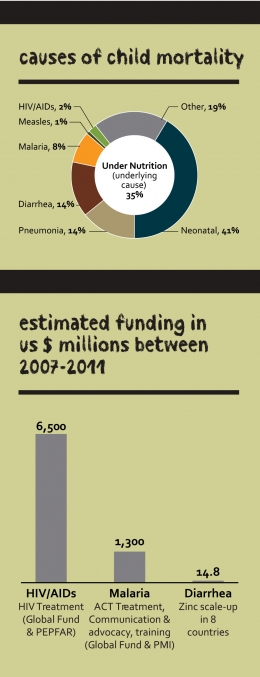
A great image from Population Services International‘s most recent issue of their magazine, Impact, from the cover article written by Desmond Chavasse, Ph.D, Vice President, Malaria Control & Child Survival, PSI, about causes of child mortality globally.

Causes of Child Mortality – Image courtesy of Population Services International

One of the purposes of the image, of course, is to show the stark contrast between directed funding for treatment and eradication of certain diseases and the number of children afflicted with these illnesses. How does this impact our understanding of global health and of the marketing around certain hot topic health issues and ways in which donors feel as though they are contributing to a decline in preventable deaths?

When I worked in development for HIV/AIDS organizations, it was fascinating to speak with donors about their reasons for giving and their understanding of the prevalence and incidence (and the general audience grasp of the word incidence, which is the measure of risk of contracting a certain illness or disease within a specified time frame) of HIV. Contrast this with the understanding of malaria, TB, diarrhea, deaths due to childbirth complications (for the mother and the infant), and the gap between perception and reality was startling. In no way do I want to deny the importance of consistent development support for all diseases on a global scale, but I do think there is something lacking in terms of the education around these issues for donors and even some advocates.

Solutions? Come chat with me on Twitter.

Conservatives Win the Healthcare Messaging War

For many left-leaning Americans, little is more important aside from the state of the economy right now than healthcare reform – and they’re inextricably linked. Coverage of healthcare reform is pretty high this week, with the expectation that the Supreme Court will hand down their decision regarding the constitutionality of the Affordable Care Act this Thursday. This hasn’t always been the case.

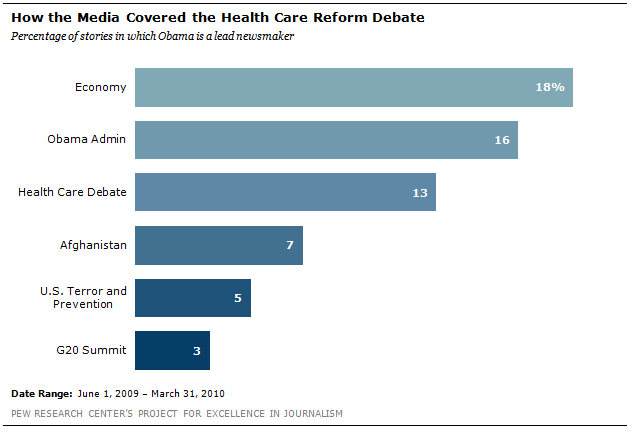
Interestingly, while this is being considered a flagship of the Obama Administration, in his first year as President, healthcare reform ranked third in terms of media coverage mentioning Obama:

Media Coverage of Stories Featuring Obama in First Year of Term – Courtesy of PEW Research Center

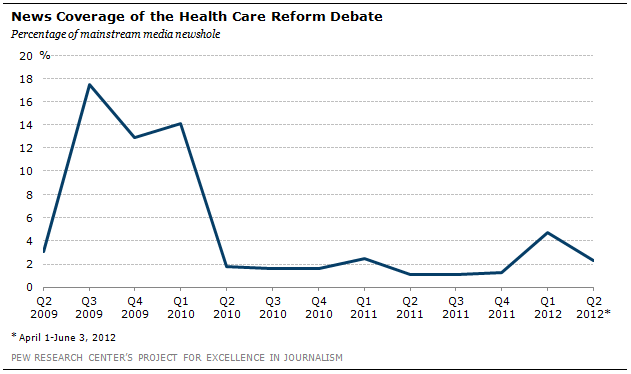
One would think that covering healthcare reform – and specifically, the details of the Affordable Care Act, and what the law really means – would be imperative after the passing of the ACA. Ensuring that the law was really understood by citizens would seem to be fairly essential, but what happened instead was a decline in media coverage of HCR after Obama’s first year as President – as shown by the Pew Research Center:

HCR Coverage Over Presidency – Courtesy of PEW Research Center

So what does that mean? If coverage goes down, and little has been done to ensure that people truly understand the law (for example, understand what the mandate really means, and what the implications are if it is struck down, which was recently elegantly laid out by the NY Times), the short messaging around the issue becomes even more important.

Cable news can be inflammatory, reactionary, harsh, exaggerated, and at times, unsurprisingly infuriating. They often preach to their respective choirs on the political spectrum, and because of this, I worry that they’ve become so comfortable with their audience that the arguments aren’t as sharp, or clear, as they could be. The brief messaging lacks context and nuance, and headlines or key phrases can substitute for deep understanding of one’s understanding of an issue (and taking today’s ruling on the Arizona immigration law, one can see how brief messaging can create some confusion – one headline read that SCOTUS struck down three components of the immigration law, and the next one I saw trumpeted that SCOTUS had upheld a key component of the immigration law – both were true, neither were particularly informative)

In the context of the fight for comprehensive health care, conservatives seem to have won this messaging game. The new study from the Pew Research Center shows that while liberal talk shows spent more time talking about healthcare reform –

Liberal Versus Conservative Talk Show HCR Coverage – Courtesy of PEW Research Center

– certain select terms used by healthcare reform opponents that really emphasized negativity were used at rates nearly twice that of terms used by supporters that underscored positive elements of healthcare reform:

Terms Used in HCR Debate – Courtesy of PEW Research Center

Take a look at these terms – which would you say were more compelling? Phrases that would incite more visceral, gut reactions from listeners? I can see how “insuring pre-existing conditions” would actually appeal to both sides, but this barely stood a chance against “more taxes with health care reform” which was mentioned nearly twice as many times and can certainly appeal to the financial fears of viewers. “More competition” would seem to appeal to many free-market espousing conservatives, but is trumped by “more government involvement,” which is the base fear of many Republicans. “Rationing health care” just isn’t true, but instead of rebutting that with facts about the law, HCR supporters shot back with “greedy insurance industry,” which likely wouldn’t win over any opponents to the law, who can claim that insurance agencies are just businesses, trying to capitalize on profits. And that’s where I think the HCR supporters had an in that they didn’t take – commenting on the prioritization of profits for a specific industry over the health of our communities and country as a whole.

Is the assumption that compassion is not an effective communication tool? If so, why is that? I find myself deeply moved by stories of people who are in desperate need of health care but lack the resources – insurance, financial, proximity to quality affordable care  – to get it. And I’m certain that I’m not the only one. New York Magazine today touched on the alarming fact that the moral argument – the empathetic position, the community cares idea, the position that healthcare is a fundamental human right – has been remarkably absent from the healthcare debate. I fear that it mostly plays into the uniquely American mentality that regardless of circumstance, each individual has to be able to fend for themselves. While this concept underscores certain types of resiliency and determination that are I think are overly-admired, the fact of the matter is that disregarding the circumstances is not possible. Disregarding the impact of staggering inequality of access to care and financial resources is short-sighted and, more importantly, I would say rather cruel.

If the discussions had focused more on why everyone deserves healthcare – why everyone deserves to be treated with dignity, receive comprehensive care, understand how to care for themselves – since healthcare is an essential component of our right to life (not to mention the pursuit of happiness), would the results have been different? If we appealed to our humanity and illustrated the absurdity of someone dying from a treatable illness, when people who could have helped them essentially stood by just because…they didn’t have any money? Because that’s essentially what this is – the inability to personally protect oneself and one’s family because of dearth of resources. If we had made it more personal, and less political? If we focused less on the greedy agencies, the so-called rationing of care, the increased business competition, if we had actually responded to the claim of too much government intrusion with the response that the government should in fact be intervening when doing so can save the lives of its citizens? Does the punishment of death really fit the ‘crime’ of not getting oneself health insurance, if one was not able to do so because they couldn’t afford it?

Is that the legacy we want to leave?

Juveniles no Longer Sentenced to Mandatory Life Without Parole

It’s about time, don’t you think? Amidst the flurry of SCOTUS activity today (striking down three components of the Arizona immigration law, but retaining the ability for law enforcement officials to require anyone they stop to show their papers, confirming that Citizens United does indeed apply to states in the case study of Montana), I was moved by their (late) decision to rule that ordering life without parole for juveniles is unconstitutional and was considered cruel and unusual punishment. Now courts will not be able to automatically hand a juvenile a life-without-parole sentence for some crimes. This doesn’t mean that sentence will no longer happen – it just means that for crimes like murder, that sentence is not automatic.

One of the most important things to remember about childhood and adolescence is that actions taken during that time are so often misunderstood in terms of their impact and their consequences, juveniles so often lack the ability to grasp the implications and depth of their choices, and they always lack real-world context. This is long overdue. It’s true that these sentences are often brought down upon juveniles who have committed atrocious acts, or were accessories in brutal crimes, but isolating the incident from the developmental stage is risky and unfair. Putting someone away without the affirmation that we also believe they can grow and develop and change is also a psychological judgment that would likely result in the juvenile’s agreeing self-assessment that they are unable to be rehabilitated.

Is This Real Life? The Reproductive Rights Version

My support of a woman’s right to choose is well-documented. I champion a woman’s freedom to make a decision about whether or not she should be carrying a fetus, and the availability of resources for her to safely and quickly terminate a pregnancy if she sees fit.

We are in  troubled times. Ceaseless efforts to deny women these rights are abound, and I could link to hundreds of articles that document this, but the handful I’ve chosen certainly upset me enough. I, along with scores of women’s health advocates, have tried any number of measurable ways to fight back – raising more money; drafting opposing legislation and striking down initiatives; testifying before hearings; writing op-ed pieces that detail our positions and rationally lay out the reasons why these reproductive rights are essential to women’s health, well-being, and even economic prospects; explaining that abortions and contraception are also necessary for reasons far beyond prevention pregnancy, and that all reasons are valid and worthwhile.

We’ve been insulted, condescended to, systematically stripped of essential healthcare resources.

I’m tired. I’m tired of the hypocrisy of the anti-choice wing. Tired of the false rhetoric. Tired of their offensively misguided and false claims to care about women as much as they care about fetuses, tired of the aggressive push to force women to maintain pregnancies that they are unprepared for and do not want, and further impact their educational and economic statuses. Tired of the trumpeting of false information about contraception that is subsequently followed up by happily taking money from the very creators of products that prompted their supposed moral outrage. Tired of their total disregard of the reality of many of these women who make the decision to have an abortion. Tired of total disregard of the statistics that undermine their arguments about the United States valuing children and their yet-to-be-realized lives. Tired of the total disregard and dismissal of real ways that abortions could be prevented – complete and comprehensive sexual health education and easy access to a variety of contraceptives. Tired of the complete disdain for women as sexually independent beings, tired of their disgust of the sexual lives of women while giving men and their sperm an unlimited free pass and the ability to impregnate and take off without even a slap on the wrist. Tired of the inability to empathize and simultaneously mete out punishments to the half of the population they deem fit the ostensible crime of engaging in sexual activity. If you want to harp on the issue of responsibility, then it is essential to ensure that both parties are equally responsible in every way – and as about half of the links I have put in this post show, that simply does not happen. Women are disproportionately – vastly so – shouldered with the entire burden of and the entire blame. That’s the reality, and it can’t be separated from the issue.

I’m tired but not worn out. I remain entirely committed to this cause, and won’t be sidetracked by opponents who use everything from personal insults to false science to shaky numbers to try to distract me. Nancy Keenan, the president of NARAL, recently announced that she is stepping down – largely due to the fact that she feels millennials need to begin steering the abortion rights ship, to combat the intense dedication of anti-abortion activists. Over 50% of anti-choicers maintain that abortion is a primary issue for them in elections, while only about a quarter of pro-choicers say the same. Well, I’m here. This remains my number one issue. Are you with me?

A friend recently sent me yet another HuffPo article, that I certainly enjoyed, but that for some reason was the straw that broke my camel’s back in many ways, as I saw her argument struggling mightily to encompass all of the above reasons why we should protect contraceptive access for all women. I’m so tired, in fact, that my response to these attacks has been harrowingly brought down to the essential core that I never thought I would need to stray from when I first realized what being pro-choice was; stripped of the attempts to rationalize (issues of medical necessity outside of pregnancy prevention aside, issues of risk to the mother aside, issues of childcare concerns and education concerns aside) with those who are, in fact, irrational about these issues. What happens in my uterus is my business alone. If you want the babies that these fetuses become, that women made the decision they cannot care for, then there should be no difficulty in deciding that you should take them. Take them all. Take them lovingly and fully, not cynically or begrudgingly. Cultivate them for 9 months, care for the baby when it’s born, love her, feed him, clothe her, educate him, without any help from me. If your goal is to punish women who you think have made flagrantly immoral mistakes, let us air all of your dirty laundry as well, and dissect every single decision you in your life made, and force you to pay for it as we see fit. And by all means, find a way to keep the men who didn’t use condoms, or bullied their partners into not using contraception and subsequently fled, or who threatened or coerced their partner, sitting firmly next to a baby’s crib. Come up with solutions to the myriad of complex social and economic issues that contribute to reasons women get abortions. Re-educate yourself on the fundamental fact that it is not your right to dictate the decisions of another person, and while that lack of control may infuriate you, it’s the way it is.  What happens in my uterus is my business alone. Wherever I go, the uterus goes. You don’t get to stake your judgment flag in my sex organs selectively at will, running “protectively” towards it when it suits you, and fleeing from it (and from what it carries) when it doesn’t. You don’t get to be there at all!

So don’t tell me that we have a collective duty to care for these unborn babies when what you are actually doing is attempting to control the freedom of women while doing everything you can to make sure that no true collectivism actually does benefit women or their babies.

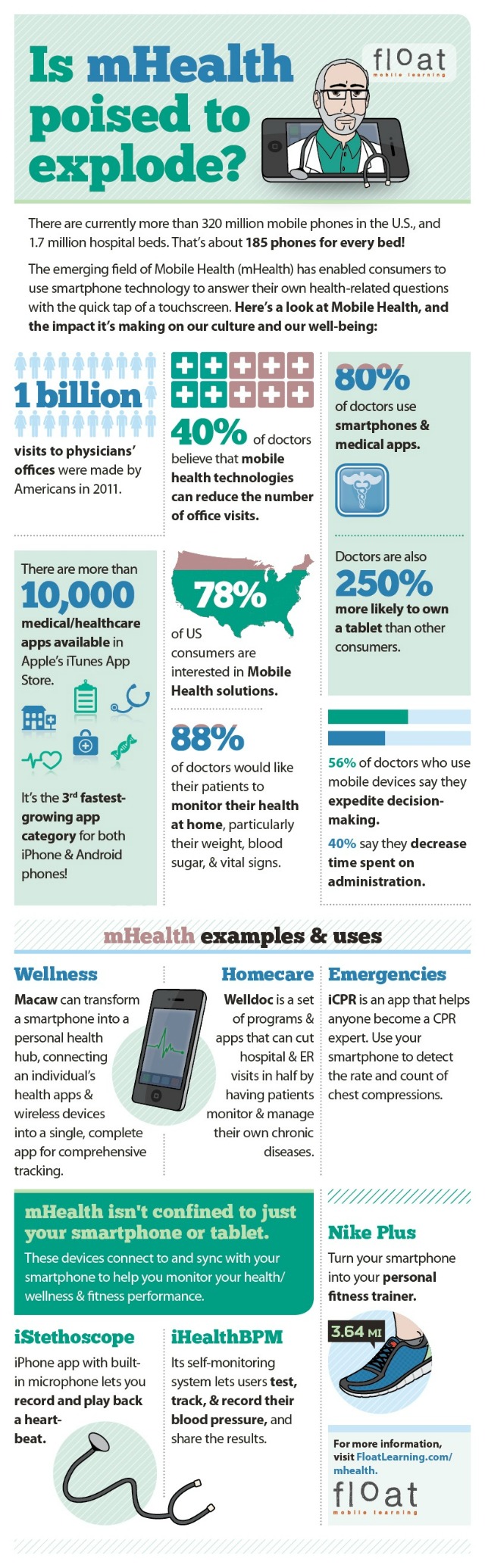
Why Doctors Think mHealth Will Cut Down on Doctor’s Visits

This is a great infographic, courtesy of Mashable, that details the vareity of ways mobile health improves patient outcomes and an individual’s ability to manage their preventitive behavior on their own. It’s a pretty robust outline:

The Changing Face of Development in the Fight for Gender Justice

As International Women’s Day approached, I was thrilled to attend a panel at the United Nations, “Youth Approaches to Funding Gender Equality and Women’s Human Rights,” with the Executive Director of an organization I am very excited to be a part of, Spark, as one of the speakers. Shannon Farley was joined by Mia Herndon from the Third Wave Foundation and Amina Doherty from the Young Feminist Fund. These dynamic leaders provided what turned out to be unique though complementary perspectives on engaging youth in development strategies, and I came away feeling revitalized and encouraged that Spark’s work is at the forefront of essential evolution in philanthropy and development.

While powerhouse young women lead each of these organizations, their differences should be noted. Spark, at 7 years old, is the middle child of the organizations, and the only one that operates within a member-driven framework, allowing those active members to vote on grantees and possible themes. Granting more than $1 million since its inception, a great feat since most gifts are seed money of the couple thousand dollar range, Spark’s offering of extensive pro-bono services to granting organizations also sets us apart – that and statistic of having nearly 50% male members. FRIDA is the new baby in the gender equality, women’s rights development world, and they interestingly refer to themselves as a “learning fund,” as each organization that applies for funding does some fairly in-depth research on other groups with whom they are competing for funds. Of the more than 1,000 applications from over 120 countries this year, FRIDA selected 125 ‘short-listed’ groups who then voted for a group in their region other than themselves who they felt deserved the grant based on their work and application. Lastly, the Third Wave Foundation, which has been around for 15 years, funds work that benefits 15 – 30 year-old women and transgender youth. They emphasize leadership development and advocacy, and given their size, are also able to offer multi-year ‘arc’ grants, supporting groups as they get off the ground, giving them a big financial push during subsequent cycles, and tapering off as the group begins to grow.

Despite these differences in age, funding history, and model of grant making, one can see the overlaps. My favorite element of the panel was discovering throughout the presentation how similar the roots of the missions of these groups are – interactivity, democratic funding policies, involvement of the grantees and groups for whom they are advocating, and leadership that represents the interests of the grantees. Each of these groups – and this is what I think draws many to Spark in the first place – emphasizes the input of passionate members or supporters who are emotionally and mentally invested in working for justice, and who may have previously been rebuffed in other volunteer development efforts. Equally important, they value the participation of those on the ground seeking to be funded. Panelists actually articulated how important the flow of communication was in the funding process, not only to ensure that the funding organizations were really sound in their understanding of the grantees, but also so the beneficiaries feel as though they are being heard and understood throughout the process. This is actually fairly empowering. This kind of communication between funding agencies and grantees used to be unheard of – grant applications would be filled out on one side, and grant-making decisions would be made on the other side, often with grantees not feeling as though they were making meaningful connections with funding organizations that would enable them to better articulate their needs.

These newer models can bring up questions of validity for some, and this query was posed by an audience member who asked the panel about issues of monitoring and evaluation (M&E), and how that was considered within these newer frameworks. This garnered perhaps my favorite answer, which was that one of the ways M&E can be handled is by changing the definition of what a successful program or initiative looks like. One of the ways these newer development organizations does this is by defining at the outset what success looks like to the grantees and how that will be measured, and emphasizing those goals in the evaluation process as opposed to adhering to strict, traditional methods that may not be appropriate measures for many of the newer, innovative groups that are seeking funding.

Piggybacking on this part of the conversation, panelists were asked about what they saw as the primary benefits and drawbacks of not working within the more traditional development models. Luckily, and unsurprisingly, these leaders focused mainly on the positive. Working within newer models allows them to take risks; to explore relationships with new groups and leaders that older, more established organizations may not have the time or framework to take on; and to nurture long term relationships with groups that can use the leadership guidance and seed money granted by organizations like Spark to get off the ground and be ready to present themselves to progressively larger funds. Essentially, these groups – Spark, the Third Wave, and FRIDA – are building a foundation to get a foot into the door of the local and global conversations about eradicating injustice for groups that may have been historically overlooked.

As the landscape for women’s rights and gender disparities shifts, this kind of risk-taking is essential in assisting burgeoning efforts of organizations that may have been traditionally ignored.

While each of these organizations emphasized the need for young women’s leadership and articulated how their models centered on the unique and essential perspectives of young leaders, the speakers also championed the importance of inter-generational work. When concern was raised by an audience member over being dismissive of the work of older activists and development organizations, panelists were adamant about the fact that their communities were grateful for the work that had come before them, and the wisdom that is often culled from creating partnerships with leaders who have been involved in gender equality development work for years.  The experience of these more senior leaders is not only valuable in gaining insight into what isn’t working and why within traditional giving pathways, but collaborating with them often leads to grant-making opportunities for these newer funding organizations. Shannon’s remarks specifically about how larger, older funds had passed on applications to Spark that are more suitable for our funding model than theirs was met with nods of appreciation from many in the audience – an audience that was in and of itself diverse in age and funding experience. And of course, having big voices in the field champion the work of newer organizations for their innovation certainly doesn’t hurt when trying to increase our donor circles.

I encourage my readers to check out Spark, and consider becoming a member. It’s an incredible organization that offers great opportunities for young leaders to get involved. In light of International Women’s Day, I’d also encourage you to check out these other fantastic on-the-ground groups doing fantastic work for gender equality and justice (some of them Spark grantees!):

The Komera Project: Education for girls in Rwanda, financial and mentoring assistance, started by Margaret Butler.

CAMFED: Investing in girls’ education in Africa

She’s the First: Education investment in the developing world

Plan International: Children’s rights and development around the globe

No coincidence that these organizations tend to focus on education access! Have organizations that you’re passionate about and want me to include in this list? Send ’em my way!