The Conundrum of Caving to the Food Industry in the Battle Against Obesity

I just wanted to bring your attention to an excellent piece by Kelly Brownell of the Rudd Center for Food Policy and Obesity at Yale, in which she addresses the perilous slippery slope of appeasing the food industry and how that specifically impacts our fight against obesity.

He points out that all the research of calories in versus calories out, increasing exercise, cutting sodium, sugar, and fat, the problems with cutting physical activity from the daily routine of children, the abundant prevalence of fast food, and the cost of healthy, organic alternatives has been well and good – but that we are purposely avoiding and not addressing one of the biggest challenges in combating the increasing waistlines in America. The total avoidance of tackling head-on the way food is marketed, made, sold, and how quickly even healthcare organizations in need of a little extra cash may take a sponsorship or donation from a group directly contributing to many of the health issues that organization is tackling.

I know we live in a capitalist society. I know that the element most prized in this economic system is a competitive market and that supporters think private enterprise should be able to do whatever it likes in terms marketing and aggressive behavior towards consumers and that the individual is supposed to be able to make an independent choice. I also think that’s ridiculous. To assume that someone’s behavior is not influenced by the massive inundation of public messages, no matter how smart they are, disproves years of communication and sociological research. I always find it amusing when major corporations or businesses decry critics who say that advertising is harmful and misleading, when in fact most corporations and businesses are counting exactly on that – that the constant (and often subliminal, or in the least, very sly) messages they’re strategically slinging at us all the time are working their magic and ensuring that people will take the bait. As a critic of many advertising practices, a supporter of progressive paternalism (known to those on the opposite side of the aisle as a nanny state), and someone who has worked with people trying to change a range if disordered eating behaviors and poor nutrition habits, I found her piece particularly compelling and in agreement with her claim that the food industry has had plenty of time to prove itself trustworthy.

I think this line really sums it up: “When the history of the world’s attempt to address obesity is written, the greatest failure may be collaboration with and appeasement of the food industry. I expect history will look back with dismay on the celebration of baby steps industry takes (such as public–private partnerships with health organizations, “healthy eating” campaigns, and corporate social responsibility initiatives) while it fights viciously against meaningful change (such as limits on marketing, taxes on products such as sugared beverages, and regulation of nutritional labeling).”

Check it out.
Integrating Family Planning and HIV Services Benefits All

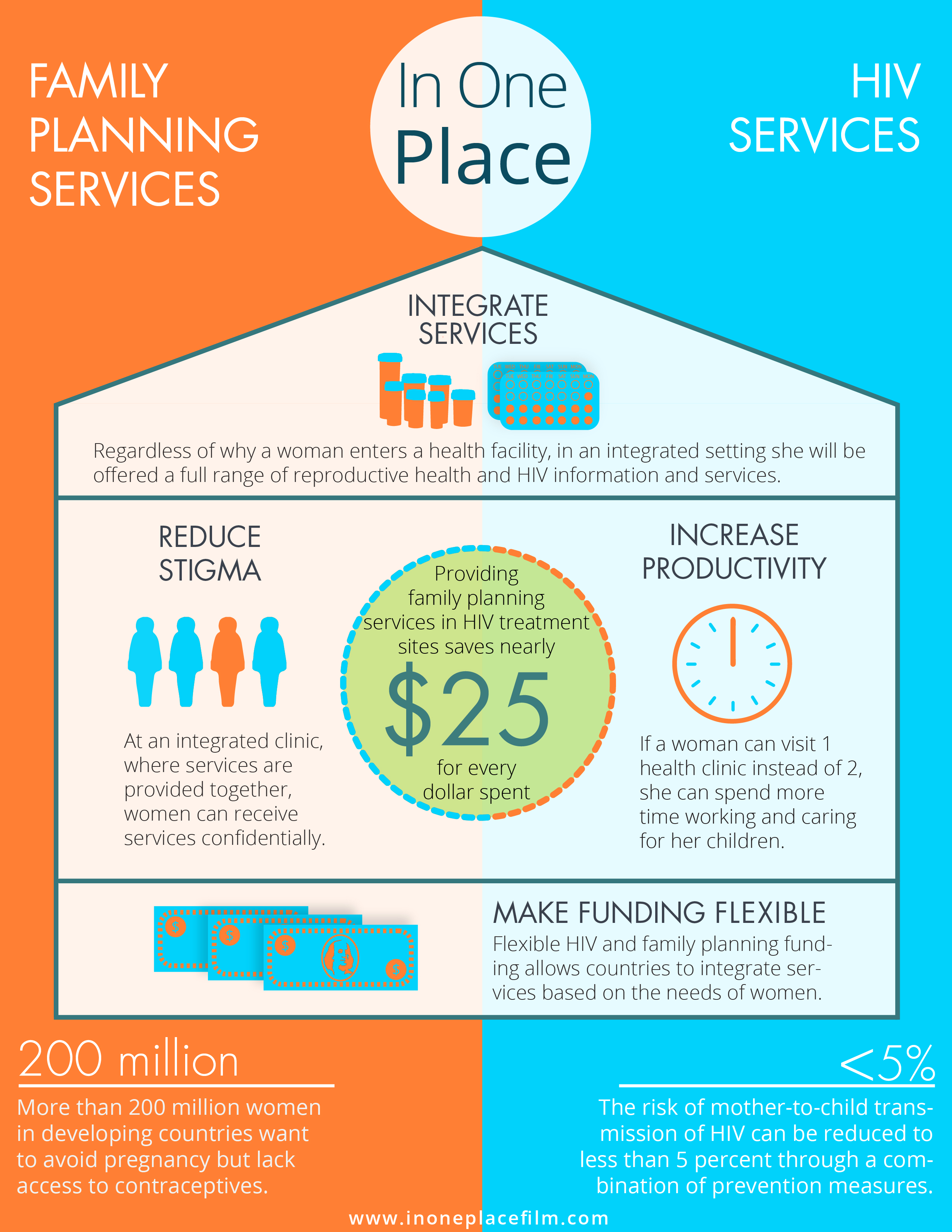
Some pretty great research is cropping up at the 2012 International AIDS Conference, and it’s hard to pick just one finding to reference, but I do love infographics and I do love family planning – so I found something that combines the two! Population Action International, a truly fantastic research and advocacy organization focused on women’s reproductive health access and care, and they make a great point about the advantages and importance of providing both family planning and HIV services at the same time and in the same place. They point out that mother-to-child HIV transmission can be reduced, stigma may decrease, and both time and money are save. Take a look:

Combining HIV and family planning services (courtesy of Population Action International).

Another issue at hand is that of the relationship between a provider and a patient or client. Family planning clinics have a better chance of establishing long-term relationships with women – particularly if women have multiple children – given that they also sometimes aid in pre- and post-natal care or help connect women to those services, which increases the likelihood of women who test HIV+ to getting the treatment they need. Again, all in one place!

Follow along at #AIDS2012 on Twitter to stay abreast of everything going on in D.C.

Maternal Health and the Status of Women

Both globally and domestically, maternal health and the standing of women are inextricably linked. If women do not have the means and access to give birth safely, with trained and educated midwives, physicians and nurses, with appropriate prenatal education and care, it is often indicative of the standing of women in their communities and countries overall. Women’s inequality is also linked to the soaring population growth in developing countries, which will pose a range of new challenges for the next few generations.

Some may point to the United States as an anomaly, citing women’s increasing economic and financial independence, education, and leadership roles in America, while in terms of maternal health rankings, we remain pathetically far down the line for our resources (49 other countries are safer places to give birth than the U.S. – despite us spending more money on healthcare than anywhere else). Of course, the recent and incessant attacks on allowing women to access credible, accurate, up-to-date and comprehensive sexual and reproductive health education and services makes this statistic not entirely…surprising, shall we say.

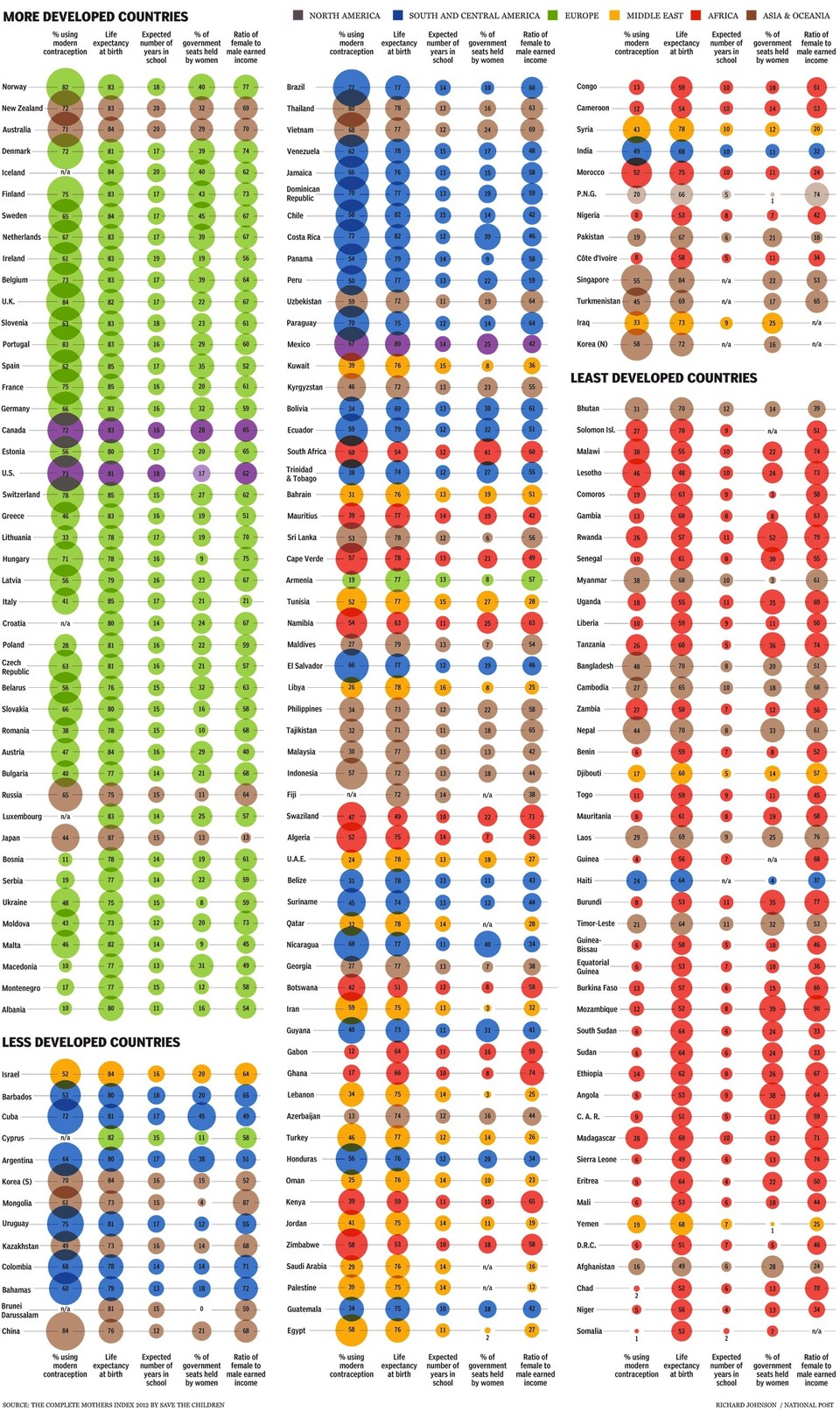
So, I found the incredibly detailed and visually impressive infographic by the National Post, pulled from spectacular data and research done by Save the Children to be particularly fascinating. What they did was combine information on the health, economic, and education status of women to create overall rankings of the best and worst countries for women, splitting the countries into categories of more developed, less developed, and least developed, and the countries were ranked in relation to the other countries in their category (the divisions were based on the 2008 United Nations Population Division’s World Population Prospects, which most recently no longer classified based on development standing). While these divisions and the rankings can certainly be contentious and may incite some disagreement (nothing unusual there, these kind of rankings usually are), I thought the results were interesting. Some highlights – Norway is first, Somalia is last. The United States was 19th, and Canada was 17th (Estonia fell in between us and the Great White North) in the most developed. Israel is first in the less developed category, and Bhutan is first in the least developed category. The full report with data from Save the Children is also available, if you want to learn more about the information combined to make this image. Take a look:

A Woman’s Place – Courtesy of the National Post

One thing that I thought was particularly great was that the researchers combined women’s health and children’s heath data to create rankings specific to being a mother, when that category is sometimes only assessed based on access to reproductive care.The specific rankings of maternal health highlights largely mimics the overall standing of women, as seen here – Norway is number one, again, and Niger falls into last place:

Mother’s Index, Courtesy of Save the Children

I think these images and graphs are particularly moving given one of the top health stories coming out of the New York Times today, which showed that a recent Johns Hopkins study indicated meeting the contraception needs of women in developing countries could reduce maternal mortality (and thereby increase the standing of women in many of the nations doing poorly in the above ranking) globally by a third. When looking at the countries in the infographic that have low rates of using modern contraception and the correlation between that and their ranking in terms of status of women, it’s not surprising what the JH researchers found. Many of the countries farther down in the rankings have rates below 50%, and for those countries filling the bottom 25 slots, none of them even reach a rate that is a third of the population in terms of contraceptive use – which of course in most cases has to do with availability, not choice. Wonderfully, the Gates Foundation yesterday announced that they would be donating $1 billion to increase the access to contraceptives in developing countries.

Also of note, and in relation to maternal and newborn health, is a new study recently published by Mailman researchers that showed PEPFAR funded programs in sub-Saharan Africa increased access to healthcare facilities for women (particularly important for this region, as 50% of maternal deaths occur there), thereby increasing the number of births occurring in these facilities – reducing the avoidable (and sometimes inevitable) complications from labor and delivery, decreasing the chance of infection and increasing treatment if contracted. This has clear implications for children as well (and why I think this study relates to the National Post infographic and the NY Times article), since newborns are also able to be assessed by trained healthcare workers and potentially life-threatening conditions averted – including HIV, if the newborns have HIV+ mothers and need early anti-retroviral treatment and a relationship with a healthcare worker and system. And it goes without saying that if a new mother is struggling with post-delivery healthcare issues, including abscesses and fistulas, or was dealing with a high-risk pre-labor condition like preeclampsia, the child will have an increasingly difficult early life, perhaps even a motherless one.

Social Media Continues to Make People Feel Bad About Themselves

A study out of the UK has found (as have others more than once), that use of social media sometimes doesn’t make you feel like…really socializing. Rather, it can make you feel anxious and depressed.

The study found that participants noted a drop in their own self-esteem after viewing the accomplishments of their Facebook friends. Combine this with the fact that 25% of them claimed to have had relationship issues due to online ‘confrontations’ (which could, of course, mean many things), that more than half were rendered uncomfortable when they couldn’t easily access their social media accounts, that other studies have claimed more socially aggressive (subtly termed ‘hateful’) folks use Facebook more often, that people often deliberately post bad pictures of their friends to make themselves look better and subsequently compare their weight, body size, and physical appearance to these friends, and that Facebook is cited in divorce proceedings as being problematic for couples, and you may be liable to think that this phenomenon offer little in the way of improving our lives.

A good thing to remember here, aside from the pretty remarkable things being done with social media in terms of education, research, medicine, and public health (this USC study is great news, and touches upon the influence of social networks in ways I’ve been exploring as it relates to substance use, sexual behavior, and disordered eating behaviors, and that other studies have shown the exact opposite in terms of emotional response, is that social media does allow users to tailor the perception and identity they project. Another recent study (I’ll try to find the URL for it!) showed, unsurprisingly, that what users often admire about their friends’ virtual lives is the positive sliver that their friends elect to promote about themselves.

Also encouragingly, those children and adolescents who will have known no life without social media, recently were surveyed about their use of technology and reported that they still preferred face-to-face communication. I put limits on myself in terms of use (though I’m sure to some of you it may not seem like it!) since I feel as though I miss a lot in terms of nuance when communication online, but it remains true that both my research and personal communication projects require a fairly consistent social media presence – I admit that I’m torn. As with most everything, balance is key, but how can we monitor our behavior in ways that allow us to strike that balance without teetering into territory that destroys our positive sense of self?

Thoughts? How about you ironically follow me on Twitter to discuss?

Child Mortality – What Are the True Biggest Causes?

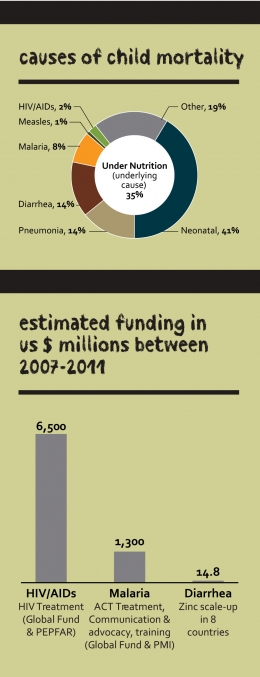
A great image from Population Services International‘s most recent issue of their magazine, Impact, from the cover article written by Desmond Chavasse, Ph.D, Vice President, Malaria Control & Child Survival, PSI, about causes of child mortality globally.

Causes of Child Mortality – Image courtesy of Population Services International

One of the purposes of the image, of course, is to show the stark contrast between directed funding for treatment and eradication of certain diseases and the number of children afflicted with these illnesses. How does this impact our understanding of global health and of the marketing around certain hot topic health issues and ways in which donors feel as though they are contributing to a decline in preventable deaths?

When I worked in development for HIV/AIDS organizations, it was fascinating to speak with donors about their reasons for giving and their understanding of the prevalence and incidence (and the general audience grasp of the word incidence, which is the measure of risk of contracting a certain illness or disease within a specified time frame) of HIV. Contrast this with the understanding of malaria, TB, diarrhea, deaths due to childbirth complications (for the mother and the infant), and the gap between perception and reality was startling. In no way do I want to deny the importance of consistent development support for all diseases on a global scale, but I do think there is something lacking in terms of the education around these issues for donors and even some advocates.

Solutions? Come chat with me on Twitter.

Is This Real Life? The Reproductive Rights Version

My support of a woman’s right to choose is well-documented. I champion a woman’s freedom to make a decision about whether or not she should be carrying a fetus, and the availability of resources for her to safely and quickly terminate a pregnancy if she sees fit.

We are in  troubled times. Ceaseless efforts to deny women these rights are abound, and I could link to hundreds of articles that document this, but the handful I’ve chosen certainly upset me enough. I, along with scores of women’s health advocates, have tried any number of measurable ways to fight back – raising more money; drafting opposing legislation and striking down initiatives; testifying before hearings; writing op-ed pieces that detail our positions and rationally lay out the reasons why these reproductive rights are essential to women’s health, well-being, and even economic prospects; explaining that abortions and contraception are also necessary for reasons far beyond prevention pregnancy, and that all reasons are valid and worthwhile.

We’ve been insulted, condescended to, systematically stripped of essential healthcare resources.

I’m tired. I’m tired of the hypocrisy of the anti-choice wing. Tired of the false rhetoric. Tired of their offensively misguided and false claims to care about women as much as they care about fetuses, tired of the aggressive push to force women to maintain pregnancies that they are unprepared for and do not want, and further impact their educational and economic statuses. Tired of the trumpeting of false information about contraception that is subsequently followed up by happily taking money from the very creators of products that prompted their supposed moral outrage. Tired of their total disregard of the reality of many of these women who make the decision to have an abortion. Tired of total disregard of the statistics that undermine their arguments about the United States valuing children and their yet-to-be-realized lives. Tired of the total disregard and dismissal of real ways that abortions could be prevented – complete and comprehensive sexual health education and easy access to a variety of contraceptives. Tired of the complete disdain for women as sexually independent beings, tired of their disgust of the sexual lives of women while giving men and their sperm an unlimited free pass and the ability to impregnate and take off without even a slap on the wrist. Tired of the inability to empathize and simultaneously mete out punishments to the half of the population they deem fit the ostensible crime of engaging in sexual activity. If you want to harp on the issue of responsibility, then it is essential to ensure that both parties are equally responsible in every way – and as about half of the links I have put in this post show, that simply does not happen. Women are disproportionately – vastly so – shouldered with the entire burden of and the entire blame. That’s the reality, and it can’t be separated from the issue.

I’m tired but not worn out. I remain entirely committed to this cause, and won’t be sidetracked by opponents who use everything from personal insults to false science to shaky numbers to try to distract me. Nancy Keenan, the president of NARAL, recently announced that she is stepping down – largely due to the fact that she feels millennials need to begin steering the abortion rights ship, to combat the intense dedication of anti-abortion activists. Over 50% of anti-choicers maintain that abortion is a primary issue for them in elections, while only about a quarter of pro-choicers say the same. Well, I’m here. This remains my number one issue. Are you with me?

A friend recently sent me yet another HuffPo article, that I certainly enjoyed, but that for some reason was the straw that broke my camel’s back in many ways, as I saw her argument struggling mightily to encompass all of the above reasons why we should protect contraceptive access for all women. I’m so tired, in fact, that my response to these attacks has been harrowingly brought down to the essential core that I never thought I would need to stray from when I first realized what being pro-choice was; stripped of the attempts to rationalize (issues of medical necessity outside of pregnancy prevention aside, issues of risk to the mother aside, issues of childcare concerns and education concerns aside) with those who are, in fact, irrational about these issues. What happens in my uterus is my business alone. If you want the babies that these fetuses become, that women made the decision they cannot care for, then there should be no difficulty in deciding that you should take them. Take them all. Take them lovingly and fully, not cynically or begrudgingly. Cultivate them for 9 months, care for the baby when it’s born, love her, feed him, clothe her, educate him, without any help from me. If your goal is to punish women who you think have made flagrantly immoral mistakes, let us air all of your dirty laundry as well, and dissect every single decision you in your life made, and force you to pay for it as we see fit. And by all means, find a way to keep the men who didn’t use condoms, or bullied their partners into not using contraception and subsequently fled, or who threatened or coerced their partner, sitting firmly next to a baby’s crib. Come up with solutions to the myriad of complex social and economic issues that contribute to reasons women get abortions. Re-educate yourself on the fundamental fact that it is not your right to dictate the decisions of another person, and while that lack of control may infuriate you, it’s the way it is.  What happens in my uterus is my business alone. Wherever I go, the uterus goes. You don’t get to stake your judgment flag in my sex organs selectively at will, running “protectively” towards it when it suits you, and fleeing from it (and from what it carries) when it doesn’t. You don’t get to be there at all!

So don’t tell me that we have a collective duty to care for these unborn babies when what you are actually doing is attempting to control the freedom of women while doing everything you can to make sure that no true collectivism actually does benefit women or their babies.

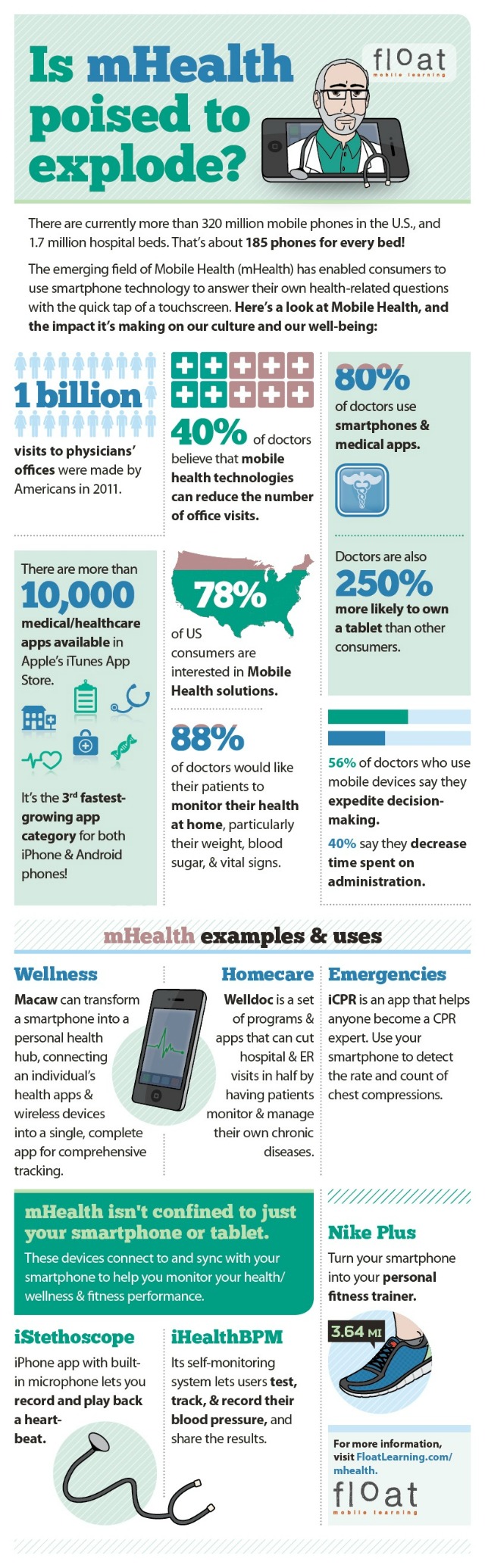
Why Doctors Think mHealth Will Cut Down on Doctor’s Visits

This is a great infographic, courtesy of Mashable, that details the vareity of ways mobile health improves patient outcomes and an individual’s ability to manage their preventitive behavior on their own. It’s a pretty robust outline: